
Ilya Sutskever: The Conscience of AI or the Modern World's Oppenheimer?
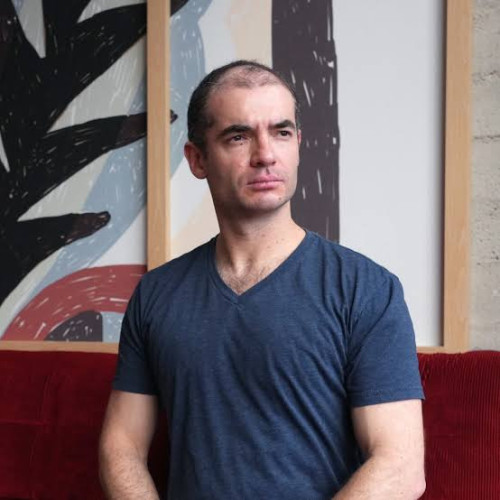
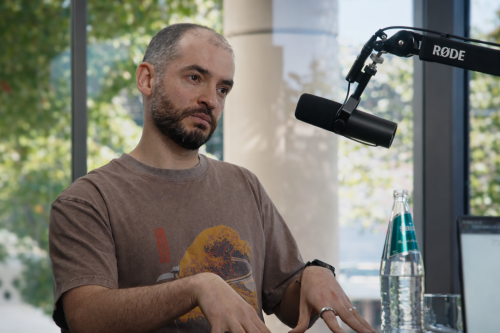
One of the most influential figures behind the AI revolution, Ilya Sutskever, holds a unique position in the tech world—renowned for both his genius and his unwavering ethical compass. As the co-founder of OpenAI, he gave the world ChatGPT, but he also became the loudest voice warning against the unbridled dangers of Artificial General Intelligence (AGI). Here is the story of Ilya Sutskever, the man many call the modern world's Oppenheimer...
Introduction: The Thin Line Between Power, Responsibility, and Conscience
"Power tends to corrupt, and absolute power corrupts absolutely."
Throughout history, humanity's greatest discoveries have always brought their greatest threats. Fire, gunpowder, the atom... all served humanity, yet all became tools of destruction. Today, artificial intelligence is the newest and most powerful link in this chain.
Ilya Sutskever stands as a unique figure in tech history—both the architect of this power and its fiercest critic. As the co-founder of OpenAI, he gifted the world ChatGPT. Yet, he is also one of the few who raised their voice against the uncontrolled development of AI.
But who is Ilya Sutskever? Why is he called the "modern world's Oppenheimer"? And what does his story tell us about human nature in the age of AI?
The Life of Ilya Sutskever: The Birth of a Multicultural Genius
A Journey from the USSR to Jerusalem, and on to Toronto
Ilya Sutskever was born in 1985 into a Jewish family in the Soviet Union. Shortly after his birth, the USSR collapsed, prompting his family to emigrate to Israel, where he spent his childhood in Jerusalem. This multicultural background (Russian, Israeli, Canadian, American) laid the foundation for his synthesizing mind, which could bring diverse perspectives together.
A Passion for Mathematics and Early Discoveries
Even in elementary school, Ilya stood out for his extraordinary mathematical talent. With the rise of the internet in the 1990s, he also discovered his passion for technology. But what set him apart from others was a vision that went beyond ordinary tech curiosity: Thinking machines.
"While everyone was preoccupied with their own crazes, his mind was on thinking machines."
What is intelligence? How does it work? How does the brain read patterns? How do neurons communicate? These questions became the central axis of Ilya's life.
Meeting the Godfather of AI: The Hinton Era
A Turning Point at the University of Toronto
When his family moved to Canada, Ilya started high school, but his teachers immediately recognized his potential. After just one month of high school, he was accepted to the University of Toronto to study computer science.
There, he met the man who would change his life: Geoffrey Hinton—referred to as the "Godfather of AI" and later a recipient of the Turing Award and the Nobel Prize in Physics.
Neural Networks and the Resurrection of a "Dead" Field
In the 1990s, working on neural networks was considered almost academic suicide. Most experts believed this approach would never yield practical results. But Ilya saw the potential in Hinton's work from the very beginning.
While everyone else was on summer vacation, Ilya went to Hinton and said he wanted to work in his lab for free, just to understand the technology.
Classical Methods vs. Deep Learning
At the time, AI research resembled classical programming: manually coding everything into the computer. For example, to teach a computer to recognize a cat, you had to input thousands of rules (whiskers, ears, fur, etc.).
Hinton's team, however, took a radically different approach: Don't give the computer the fish, teach it how to fish. Show it millions of cat photos and let it discover the patterns on its own. This is the core philosophy of deep learning.
The AlexNet Revolution: A Watershed Moment in AI History
The ImageNet Competition and an Unexpected Victory
The year 2012 was a turning point in AI history. The ImageNet visual database was a platform where teams from around the world competed in visual recognition capabilities.
Ilya told Hinton, "We have to participate in the competition on October 17, 2012." The algorithm they developed, led by Alex Krizhevsky and based on neural networks, was named AlexNet.
When the results were announced, everyone was in shock:
| Year | Error Rate |
|---|---|
| Previous Years | ~25-26% |
| 2012 (AlexNet) | 15.3% |
"Everyone thought there was foul play involved, but the analysis pointed to a genuine revolution."
Neural networks had outperformed million-dollar initiatives overnight. That day heralded the birth of ChatGPT. Classical methods were abandoned, and the entire industry pivoted to deep learning.
The Founding of OpenAI: A Dream Forged at a Dinner Table
A Historic Dinner and a Fateful Decision
Ilya was working at Google, with access to all the data and computing power he could want. Yet he constantly felt the urge to build something bigger. He craved freedom and creation.
One day, an email in his inbox changed everything: an invitation from Sam Altman. "There's a significant opportunity regarding AI. We need to meet tonight."
Who was at the dinner table?
-
Sam Altman (Y Combinator)
-
Greg Brockman (Fresh from Stripe)
-
Elon Musk (Tesla and SpaceX)
-
And Ilya Sutskever
OpenAI was born at that very table.
The Vision: AGI - Artificial General Intelligence
OpenAI's founding purpose was never to be just another AI company. The goal was AGI—Artificial General Intelligence—machines that match or surpass human-level intelligence.
Ilya's philosophy was clear:
"Instead of trying to teach the AI every piece of information individually, let's give it a dataset as vast as the internet, feed it into a massive neural network, and let it learn the patterns on its own. Once the model is large enough, unexpected new abilities will emerge spontaneously."
"Scale is all" – scale it up and let it figure out the rest.
ChatGPT and Success: When Dreams Become Reality
The Transformer Architecture and Emergent Abilities
OpenAI built a single Transformer-based neural network. They fed it trillions of words from the internet and repeatedly gave it the task: "Predict the next word."
They scaled the model with more data, more parameters, and more computing power. And just as predicted, unexpected abilities emerged: language comprehension, logical reasoning, coding, and creativity.
The result: ChatGPT.
However, for Ilya, the goal was never ChatGPT. The goal was AGI. ChatGPT was merely a stepping stone.
Two Diverging Visions: Speed vs. Safety
Sam Altman: Rapid Progress and Commercial Success
With ChatGPT's success, OpenAI became one of the world's most valuable AI companies. Sam Altman wanted to push products out to users quickly, attract more investment, and maximize commercial success.
Ilya Sutskever: The Threat of AGI and Prioritizing Safety
Ilya saw things differently:
"AGI might be closer than we think. We need to take safety research much more seriously."
In 2023, he established the Superalignment team and announced that OpenAI would allocate 20% of its computing power to researching superintelligence safety.
The Breaking Point
Ilya accused Sam Altman of lacking ethics, being unvisionary, and becoming a slave to money. With a board decision, Altman was temporarily removed from his CEO position.
However, intense pressure from the business world and Microsoft led to Altman's return. Ilya faced immense backlash and, in 2024, released the following statement:
"I regret participating in the board's decision."
Shortly after, he left OpenAI.
A New Beginning: Safe Superintelligence
Building Safe Superintelligence Free from Commercial Pressure
After leaving OpenAI, Ilya Sutskever founded his own company: Safe Superintelligence.
Its mission is clear:
-
Build safe superintelligence first
-
Free from product pressure, revenue pressure, or commercial race
-
Focus solely on the long-term benefit of humanity
Why is Ilya Sutskever Called the Modern World's Oppenheimer?
"Staring at the mushroom cloud of the bomb he created for the good of humanity, feeling immense regret – J. Robert Oppenheimer."
Oppenheimer created the atomic bomb and later regretted it. Ilya opened the door to AGI and then warned against its uncontrolled development.
Both of them:
-
Created some of history's greatest breakthroughs
-
Realized the destructive potential of their creations
-
Struggled to control them
-
Felt deep regret
What Was Ilya's Biggest Miscalculation?
Perhaps Ilya's greatest mistake wasn't technical. It was miscalculating human nature.
His entire life was dedicated to understanding intelligence:
-
How does a machine learn?
-
How does it think?
-
How does it stay safe?
But the one variable he might have missed was human nature:
-
Ambition
-
Greed
-
Power
-
The desire for control
The Biggest Problem in the Age of AI: Human Nature
Looking back today, we realize:
"Developing AI proved easier than controlling it. The real challenge was controlling the humans developing it."
History has taught us the same lesson repeatedly:
-
Fire wasn't evil
-
Gunpowder wasn't evil
-
The atom wasn't evil
-
The humans who used them were sometimes evil
Perhaps Ilya Sutskever's story isn't actually about artificial intelligence. Maybe it's about humanity.
Conclusion: Before Asking "Can We?" We Should Ask "Should We?"
Perhaps the biggest mistake of the AI age was this:
"Before answering 'Can we do it?', we forgot to ask 'Should we do it?'"
Ilya Sutskever asked this question too late. But he still asked it. And that is what distinguishes him from the other "creator-geniuses" of history.
Does he deserve to be called the modern world's Oppenheimer? Perhaps. But perhaps the most important lesson from his story is that as we shape the future of AI, we must prioritize ethics, safety, and the greater good of humanity.
Frequently Asked Questions (FAQs)
Who is Ilya Sutskever?
Ilya Sutskever is the co-founder of OpenAI and one of the world's leading figures in artificial intelligence and deep learning. He worked with Geoffrey Hinton, pioneered the deep learning revolution with AlexNet, and played a key role in developing ChatGPT.
Why did Ilya Sutskever leave OpenAI?
He left OpenAI in 2024 due to fundamental differences in vision regarding AGI safety compared to Sam Altman and the board. He argued for prioritizing safety research over rapid commercialization.
What is Safe Superintelligence?
It is the company Ilya Sutskever founded after leaving OpenAI. Its goal is to build safe superintelligence without commercial or product pressure.
Why is Ilya Sutskever compared to Oppenheimer?
Like Oppenheimer, who regretted creating the atomic bomb, Ilya pioneered the path to AGI but later became one of its most vocal critics, warning of the existential dangers of uncontrolled development.
Why is AI safety so important?
If AGI reaches human-level or above intelligence, it could pose an existential threat to humanity if it falls into the wrong hands or goes out of control. That is why safety research is critically important
Alakalı İçerikler
-
Netflix Enhances AI Control in Video Editing 8 Saat önce
Netflix has announced a new AI approach that gives artists precise control in video editing while preserving original image quality.

-
MiniMax H3 ve H3 Max AI Gateway'de %50 İndirim 16 Saat önce
Vercel, AI Gateway üzerinden MiniMax H3 ve H3 Max modellerini %50 indirimle sunarak, gelişmiş yapay zeka çözümlerine daha düşük maliyetle erişimi teşvik ediyor.

-
Apple, M6 ve M5 Ultra ile masaüstü gücünü artırdı 3 Gün önce
Apple, yeni Mac mini ve Mac Studio modellerine M6 ve M5 Ultra çiplerini ekleyerek performans ve yapay zeka işleme kapasitesinde kayda değer bir yükseliş sağlıyor. Bu adım, masaüstü bilgisayarlarda daha hızlı iş akışı ve gelişmiş AI yetenekleri vaat ediyor.

-
Claude AI Agents Now Power Chat Applications 3 Gün önce
Vercel announced the integration of Claude's managed agents with the Chat SDK, enabling developers to build smarter, automated workflows in chat-based applications.

-
New AI Integration Architecture for Smarter, Safer Robots 4 Gün önce
Arm unveils a groundbreaking system architecture designed to enable intelligent robots to operate reliably and scalably in the real world. This approach integrates AI inference, perception, and security into a unified framework.

-
Apple Unveils New Mac Studio with M5 Ultra and M5 Max Chips 6 Gün önce
Apple introduces the Mac Studio with M5 Max and the all-new M5 Ultra chips, promising significant advancements in AI and graphics performance to deliver a more efficient workspace for professionals.

- Ilya Sutskever
- Openaı
- Sam Altman
- Agı
- Chatgpt
- Geoffrey Hinton
- Alexnet
- Safe Superintelligence
- Elon Musk
- Yapay Zeka
- Derin Öğrenme
- Yapay Zeka Güvenliği
- Yapay Genel Zeka
- Sinir Ağları
- Teknoloji Etiği
Show your reaction
- 0
- 0
- 0
- 0
- 0
- 0
- 0
- 0
- 0
- 0
- 0
- 0
- 0
- 0
- 0
- 0


Comments
Add your comment